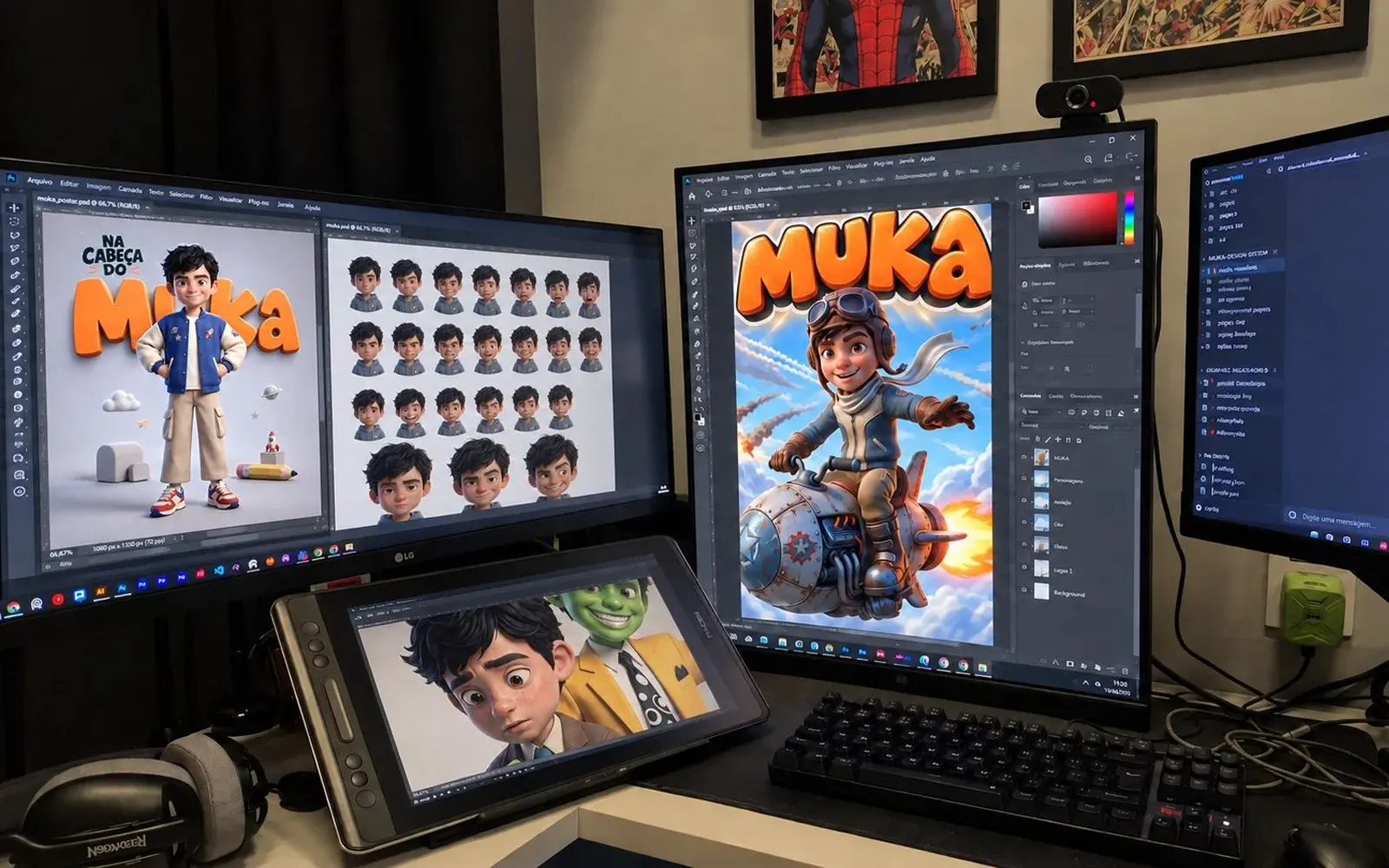
I bought a graphics tablet with a very convincing plan. It would help me correct errors in AI-generated images, redraw strange details, and work on masks better in Photoshop. It would also open up space for more manual finishing.
In my head, the flow was already working. At the table, she stood next to the keyboard. Beautiful, connected and with very few hours of use. I continued to do almost everything with the mouse.
It's a kind of funny situation because the purchase had a real justification. The difficulty appeared later: transforming intention into habit in the middle of a job full of deadlines.
The almost certain still needs finishing
The more I work with artificial intelligence, the more I understand this step. The image is generated, it looks promising and, when I look at it calmly, the feeling comes: “It's almost right, but there's still something bothering me.”
This discomfort matters. It may be in a detail that needs correction or in the relationship between the elements of the image. It's time to step away from the excitement about the generation and look at the finish.
It was with this in mind that I bought the graphics tablet. I imagined using the pen to intervene in the images more freely, especially in masks and retouching in Photoshop. I didn't want to end the process on the file that the AI delivered.
Buying is not incorporating into the process
Maybe it's customary. Maybe it's the resistance to learning a new way of working when the mouse already solves a lot of things. Or maybe I tried to solve, with a purchase, a need that I hadn't yet organized properly.
A tool can make sense for work and continue without a defined place in everyday life. Her presence at the table does not automatically create that place.
This experience made me think about a more concrete question than “do I need a graphics tablet?”. What task do I want to accomplish with it? If the answer remains generic, any urgency becomes a reason to return to what I already know.
A smaller next step
I still don't have a transformation story to tell. The table did not revolutionize my process, and it would be strange to write as if that had already happened.
The path that makes sense to me is to start with a delimited task: a mask adjustment, a touch-up or a finishing detail. Learning there, without demanding that the tool replace my entire way of working at once.
It's an idea of how to unlock use, not an experience that I can already present as resolved. But it seems more realistic than waiting for the perfect project to finally start.
For now, I continue using the mouse and looking at the table with that feeling of accumulated potential. If you've been through this, you might recognize the scene: the tool is ready to work. We are the ones who still need to adapt.