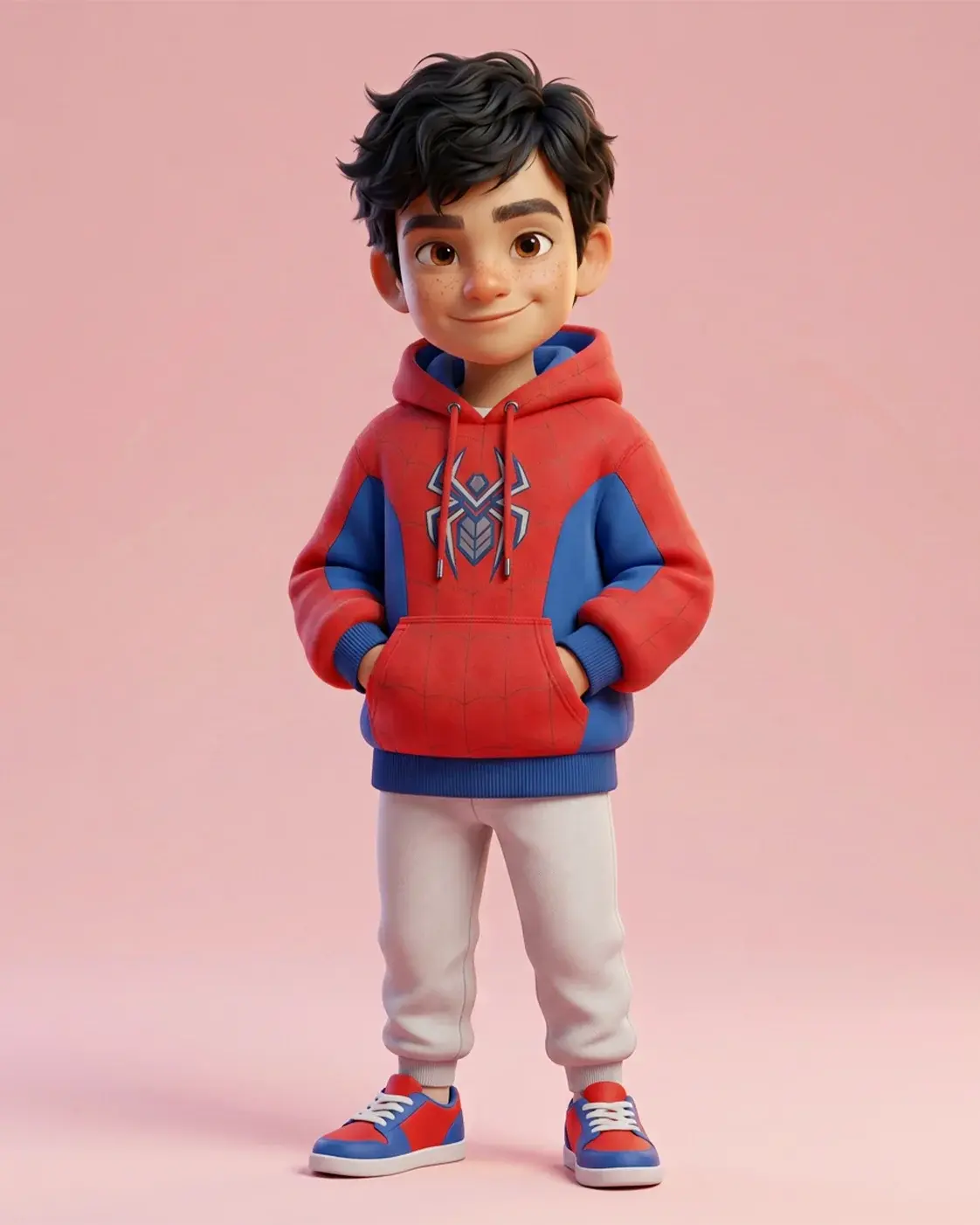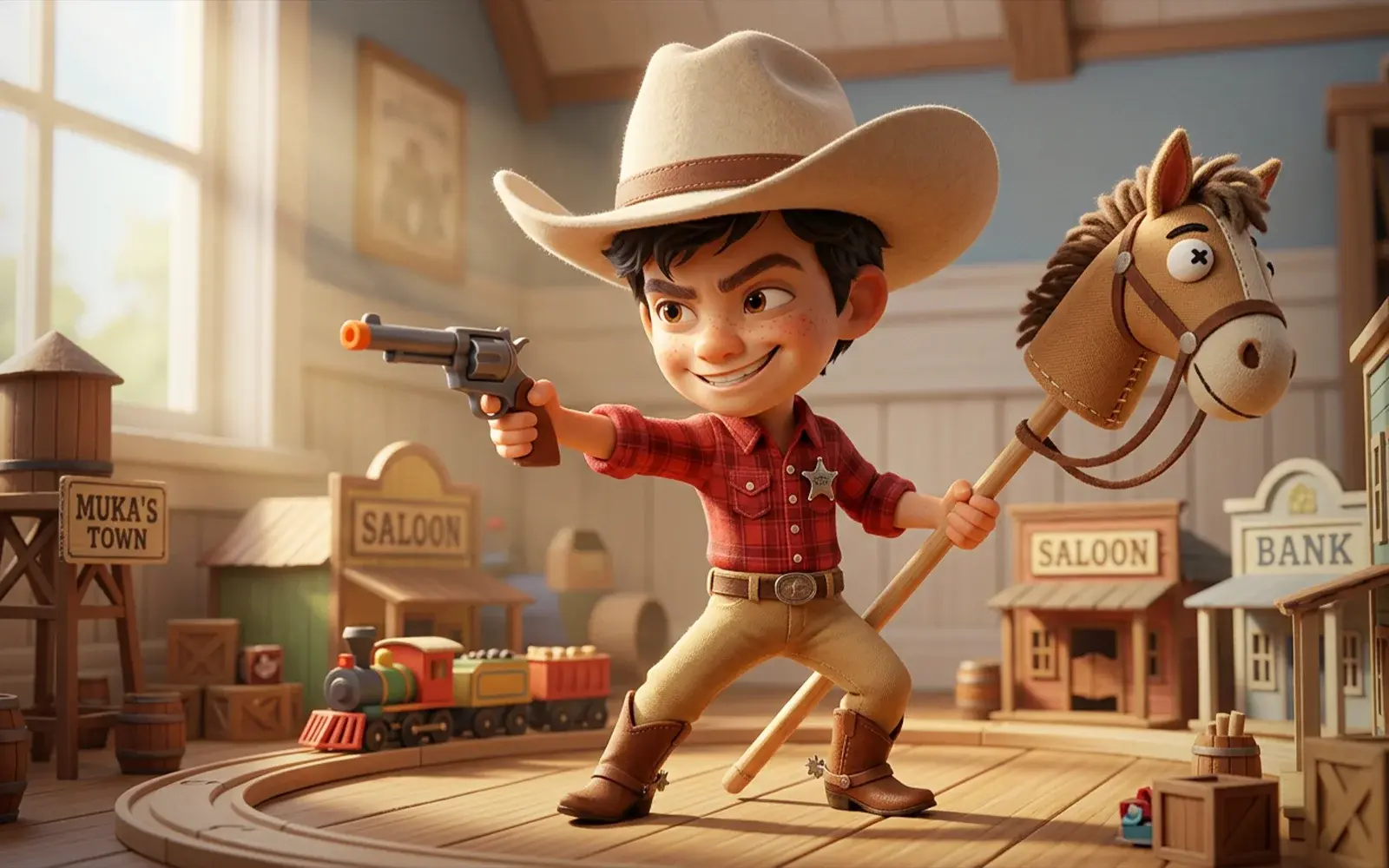
Muka began as an authorial project to explore a possibility that interested me: bringing together artificial intelligence, art direction and traditional design processes in the construction of a character.
I also wanted to develop a visual universe. This made creation more than just finding an image I liked. The character needed to have characteristics that could be worked on in different poses, expressions and situations, without losing its own identity.
It was from this process that Na Cabeça do Muka was born, a project that still has a lot to show.
Before the generation came the concept
The work involved concept, references and character studies. I went into issues such as proportions, clothes, poses and expressions, trying to understand what helped give Muka its shape.
When creating characters with AI, these elements serve as criteria. A change in clothing or proportion may seem small in an isolated image, but it changes the way we recognize the character when we see several images together.
Therefore, studies played an important role in the construction of visual identity. The goal was to develop an artistic direction that guided the testing, rather than letting each new result alone define the next step.
The role of character sheets
I also worked with character sheets: study boards that bring together visual aspects of the character. They help you look at proportions, poses, and expressions together, rather than evaluating everything as independent images.
This perspective is especially useful when AI enters the process. A generation can bring an interesting solution to the expression and, at the same time, move away from the character in another detail.
Consistency depends on comparing results with the direction set for the character. It's not enough to like each image separately. It is necessary to understand if they seem to be part of the same project.
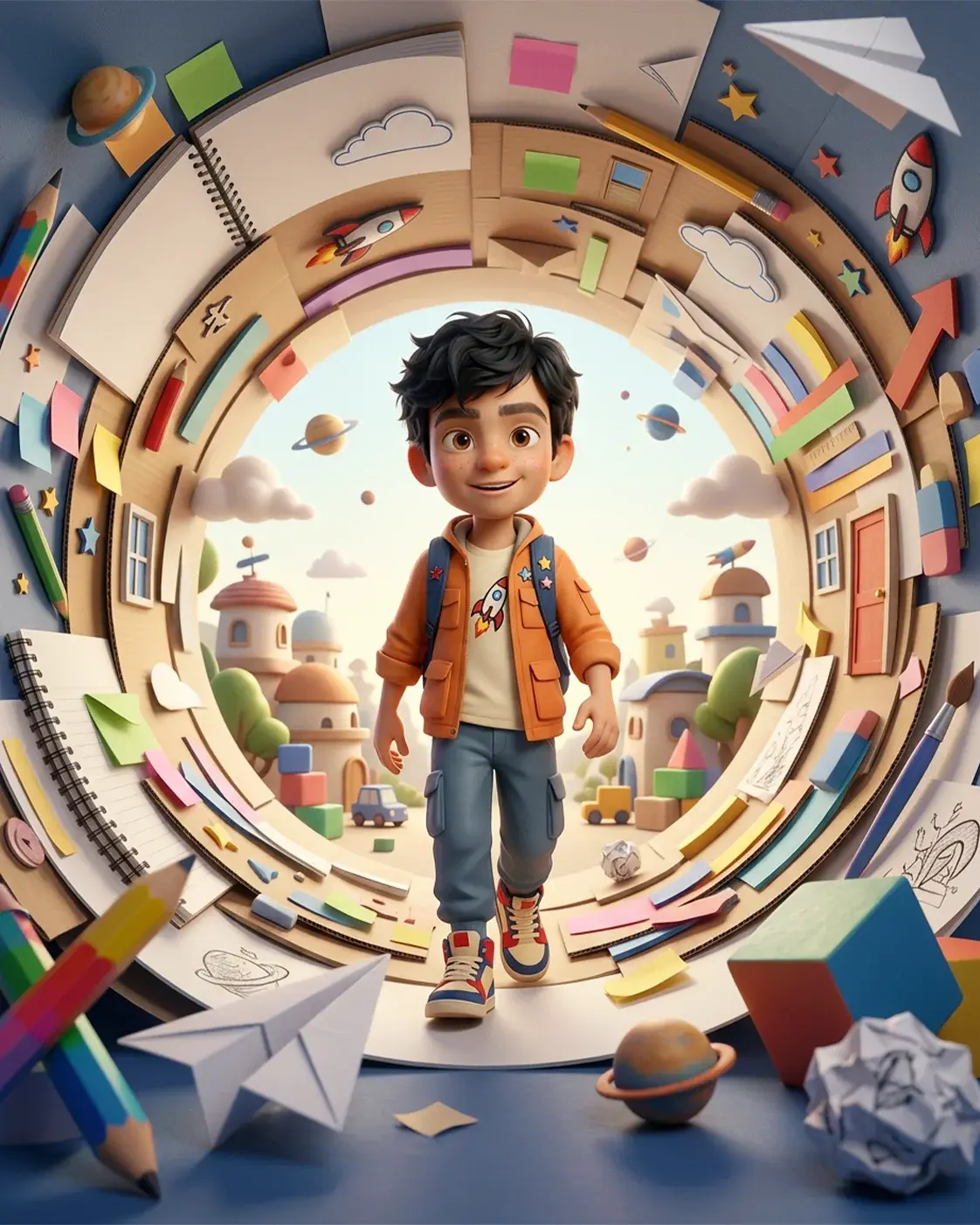
Photoshop participated in the construction
After the different tests with AI, came a step that I consider fundamental: direction, selection, adjustments and final art in Photoshop.
The refinement involved lighting, details, textures and composition, as well as care for visual consistency. This finish helped bring the result generated closer to what I was looking for in the Muka universe.
The division between generation and completion does not mean that creation takes place in completely isolated stages. Looking at a result can also show what still needs to evolve in the study of the character.
Muka gave me space to explore this relationship in an authorial project. The technology participated in testing and image production; The artistic choices continued the work.
Whoever sees the finished character may first find the expression, the style or a detail of the scene. I also see the studies that made it possible to get there. It is this process that I want to continue developing as the universe of Na Cabeça do Muka gains new images.