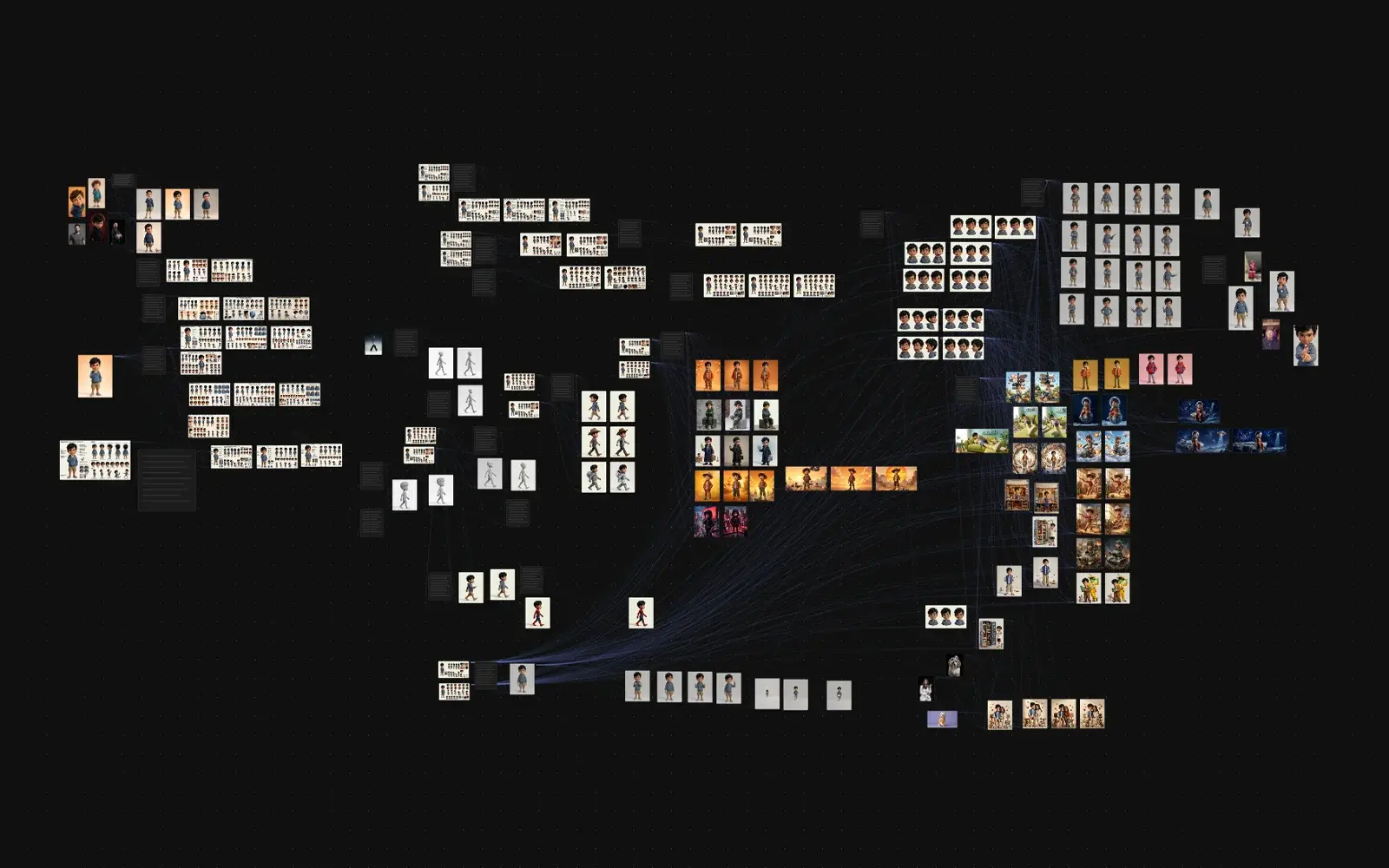
“Just throw it at the AI and it does it.”
I understand where this impression comes from. Anyone who sees a finished image doesn't follow the discarded versions, the open references and the adjustments that happened before. See the character working and imagine that it came out like that on the first try. It would be amazing. Including my deadlines.
In one of my projects, a single character went through more than 50 prompts, more than 30 styles tested, more than 30 visual references and more than 50 adjustments. The number draws attention, but the point is not to transform the number of attempts into a certificate of quality. It is to show that there was a search behind that result.
What I was looking for
I needed to arrive at a character that had identity, consistency and relationship with the project. An image could be interesting in isolation and still not solve that need.
That's where AI art direction comes in. It establishes criteria to evaluate what was generated. Does the style match the concept? Does the character seem to belong to that universe? Do visual choices help build a recognizable identity?
Without these criteria, the selection becomes a competition between beautiful images. And a beautiful image is something that the tool delivers quite easily. Choosing the one that makes sense requires understanding the work it needs to do.
Reference also serves to discard
Testing styles and gathering references doesn't mean putting everything into one huge prompt. It means expanding the repertoire to recognize possibilities and realize when an option is taking the project to another place.
During exploration, paths appear that deserve to be developed and others that need to be left along the way. Discarding is also part of creation. Sometimes, the most impressive image is precisely the one that takes us the most away from the concept.
The more possibilities AI offers, the more important it is to have a choice criteria. Otherwise, each generation opens up another direction and the project never finds its way.
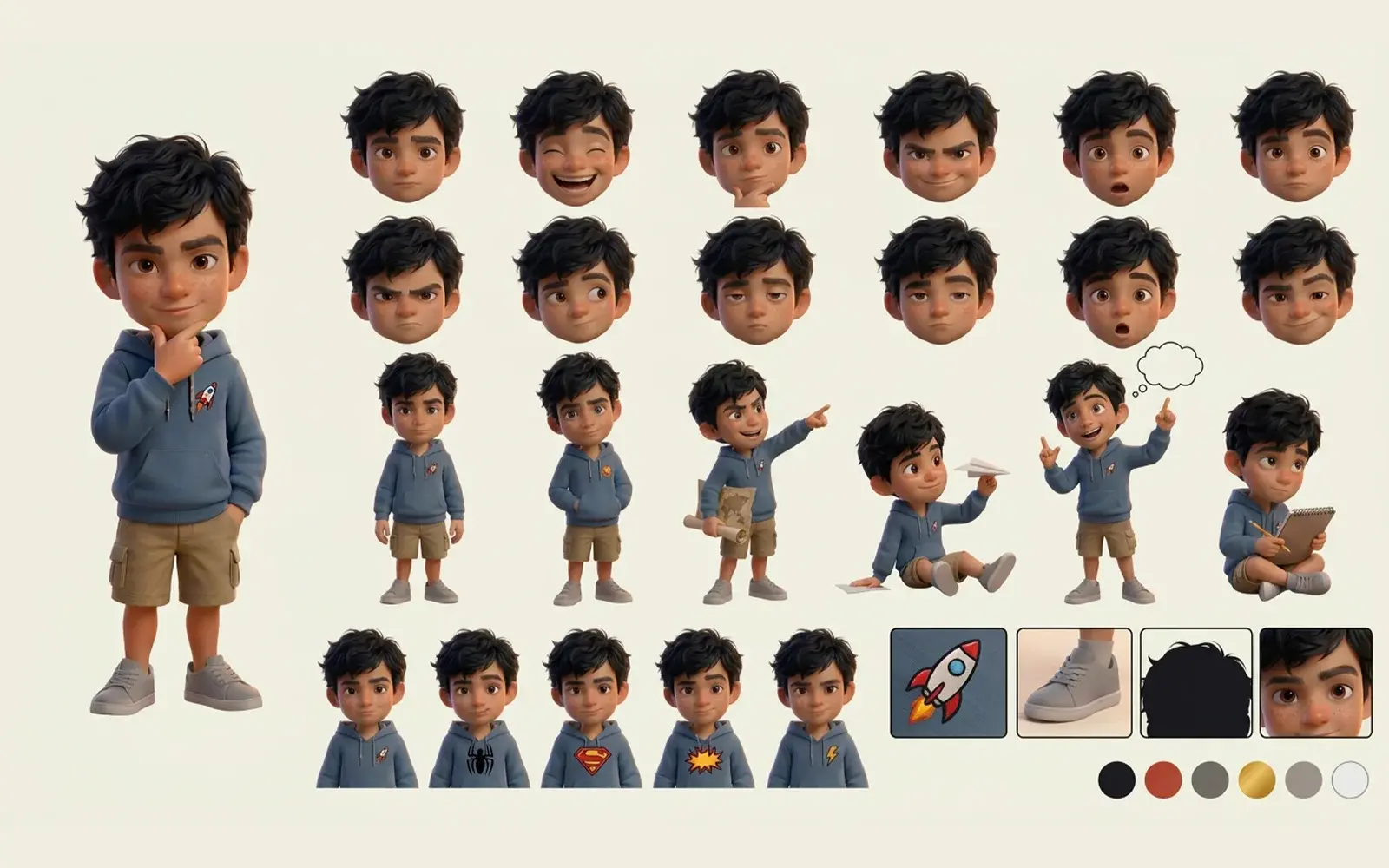
The result hides the process
After exploration comes refinement. This is the phase of evaluating details, adjusting what still bothers you and deciding when the result is sufficiently resolved to move forward.
This backstage usually disappears in the final presentation. One sees a character, not the dozens of decisions that made that character possible.
For me, using artificial intelligence in design has made this responsibility even more evident. The prompt participates in the process, but does not alone determine what deserves to become a final work. This decision remains in the hands of those who know the project.
When someone says it was “just playing on the AI”, I remember that set of tests. The button took seconds. Understanding what I wanted to find took a little more work.