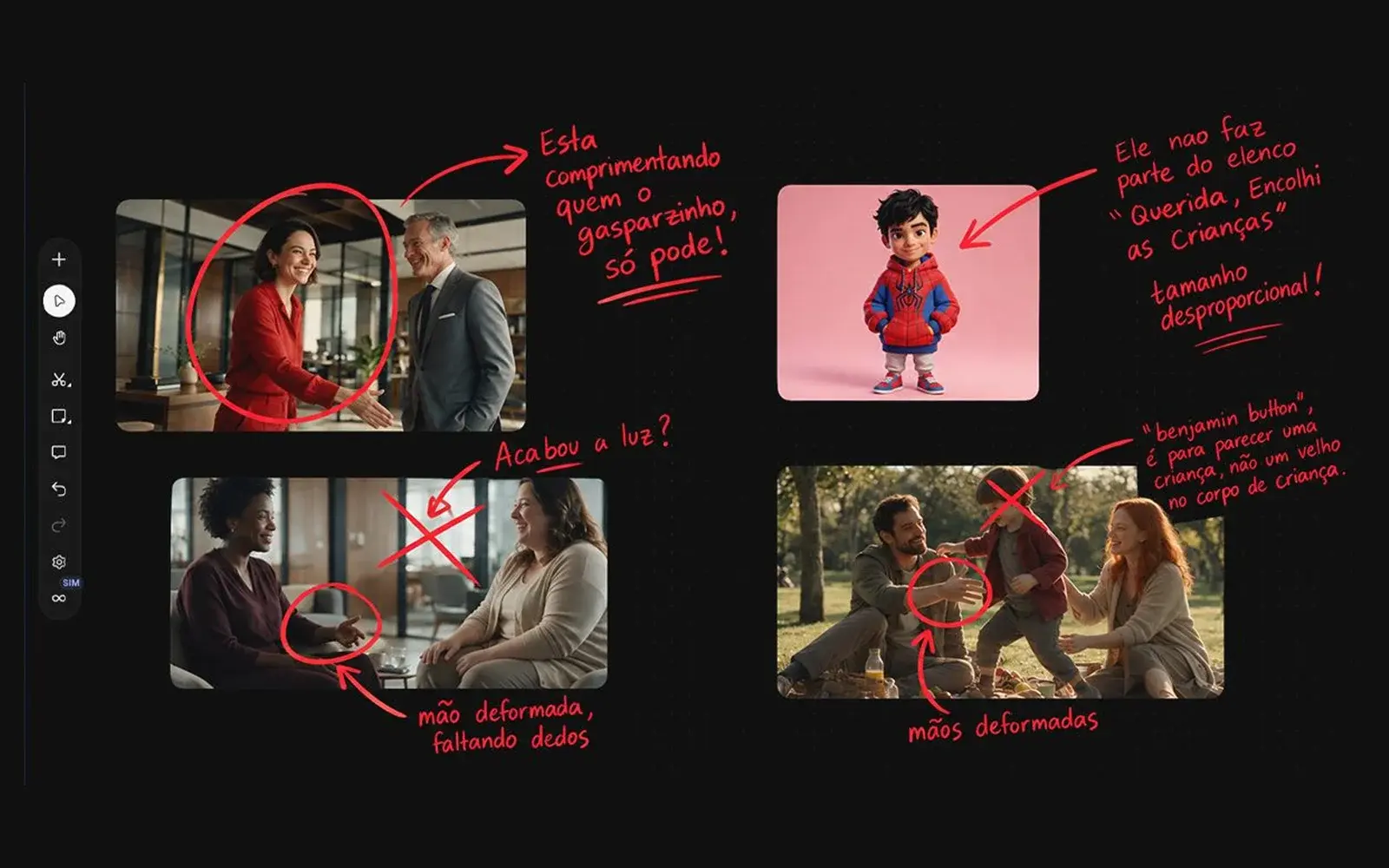
The first result arrives quickly. The image attracts attention, looks well finished and gives the impression that an entire stage of work has been resolved.
Then someone takes a closer look. The hand feels strange. The light doesn't seem to make sense. The logo was deformed. Or the image is beautiful, but it could belong to any brand except the one it is supposed to represent.
It's a type of problem that I've seen in my work with artificial intelligence. Generation speeds up the beginning, but errors and unresolved choices reappear when using the material. The savings arrive accompanied by a portion of rework that no one put into the planning.
Pretty on screen doesn't mean ready to use
An image can work on first impression and fail on application. Some problems are visual, such as anatomy and lighting. Others appear when the file needs to meet a specific delivery, including printing materials.
There is also a less obvious error: the lack of relationship with the brand. In this case, correcting one detail does not solve everything. The look can be technically convincing and still communicate the wrong personality.
For me, reviewing AI-generated images requires looking at both of these sides. The file needs to be usable and the creation needs to make sense in the context in which it will appear.
When is it worth correcting and when is it worth starting over?
Correcting AI-generated images should not be a knee-jerk reaction of trying to save any result. First, you need to understand what is wrong.
A localized detail can pave the way for an adjustment. When the problem lies in the concept or style that the brand needs to express, it may be best to go back to the initial direction. This is a creative decision, not just a touch-up task.
The professional needs to evaluate the result before deciding how much work to invest in it. Otherwise, you spend hours refining an image that you should never have followed through on.
Speed needs to consider delivery
I use AI in almost my entire process. Precisely for this reason, I don't see any point in measuring efficiency just by the time of the first generation.
The material still needs to go through selection, review and finishing until it is usable. If the image comes out in seconds, but requires a sequence of corrections that could have been avoided, part of the work has simply moved.
That's why I consider it so important to be able to look at the options, identify what doesn't work and choose a path consistent with the brand and the business.
In the next project, the question I would ask the team is simple: how long are we taking until final delivery? This response says more about the actual gain of the process than the speed of a button. The image could have been ready quickly. The work only ends when it serves what it was created for.